
Running a 16-Clinic Spine Care Chain on One Platform
Intro
ANSSI Wellness treats chronic back and neck pain without surgery, across sixteen clinics in India. Grabodo built the platform that runs the business behind the treatment: 280 dashboard screens and 124 API routes covering the patient journey, the front desk, the books, the staff and the marketing that fills the appointment diary.
ANSSI Wellness is a chain of non-surgical spine care clinics in India, treating chronic back and neck pain without surgery, medication or injections. Grabodo built the operating platform behind it - a Next.js application on Supabase that sixteen clinics work in every day.
The Background
A single clinic can be run on a diary and a cash book. Sixteen cannot. Each site was generating its own patient records, its own collections, its own staff attendance and its own local spend, and head office was assembling a picture of the business from returns that arrived late and rarely agreed with each other.
The clinical side had the same problem in a more serious form. A course of spinal decompression runs over many sessions and often moves between locations, so a patient history split across clinics is not just an administrative annoyance - it is a gap in care.
The Challenge
The platform had to serve four audiences that normally get four different systems. Clinicians needed examination records, treatment plans, session notes and progress tracking. The front desk needed appointments, check-ins, calls and a WhatsApp inbox. Finance needed a chart of accounts, bank reconciliation, cash collection, refunds and per-clinic revenue. HR needed attendance, rosters, documents, assets and exit processes.
All four had to resolve to the same patient and the same clinic, in one system, without the clinical record becoming an accounting ledger or the accounting ledger becoming a medical file.
The Solution
The build treats the clinic as the organising unit. Every module is clinic-aware, so revenue, sessions, expenses and staffing can be read for one site or for the whole chain, with geofencing tying check-ins to the location they were claimed at.
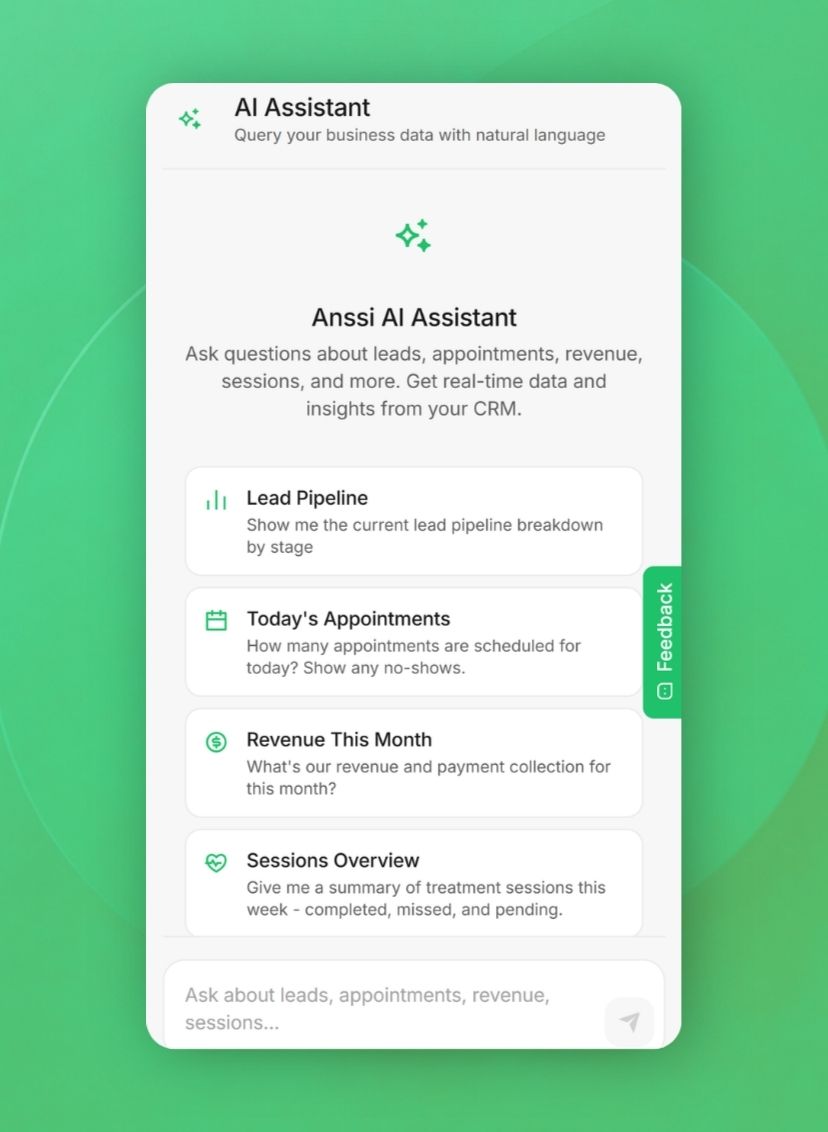
On top of that sits an AI layer used where it earns its place rather than as decoration: consultation audio is transcribed, doctor-facing analysis summarises a case, a data-chat interface answers questions against operational data in plain language, and marketing content is drafted and scheduled from the same platform that reports on what the campaigns produced.
The Solution
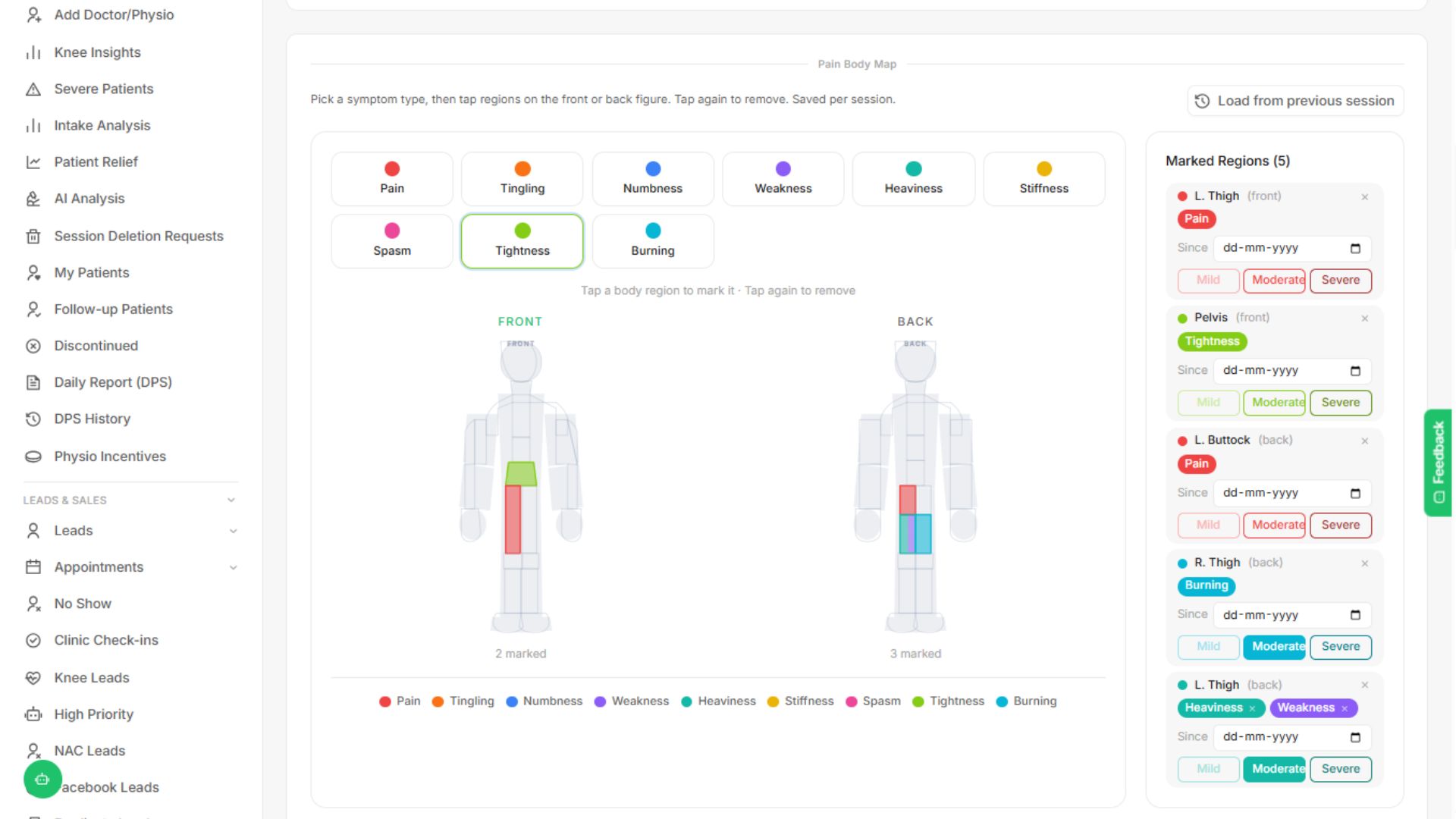
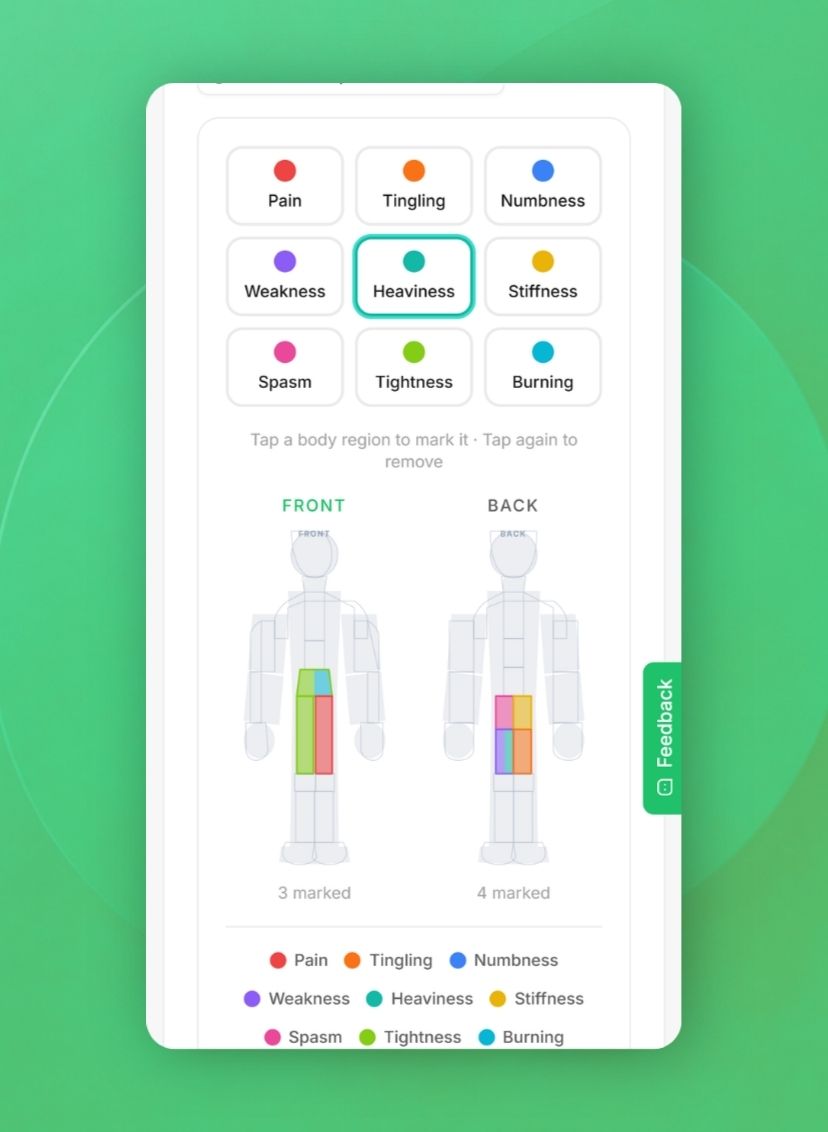
- 01A clinical spine covering the whole course of treatment - examinations, treatment plans and packages, session scheduling and notes, patient progress, follow-ups, treatment alerts and discontinuation - so a patient history holds together across sixteen sites.
- 02A front desk built around how a clinic actually runs the day: registration, appointments, clinic check-ins with geofencing, call handling and a WhatsApp inbox in the same place as the diary.
- 03Finance as a real accounting module - chart of accounts, bank reconciliation, cash collection, petty cash, expenses, refunds, quotations, fixed assets, pending amounts and prior-month collections, all readable per clinic or across the chain.
- 04An HR system covering the employment lifecycle: attendance with regularisation and reporting, staff schedules, time logs and approvals, documents, assets, holidays, and a full exit process including interviews and final settlement.
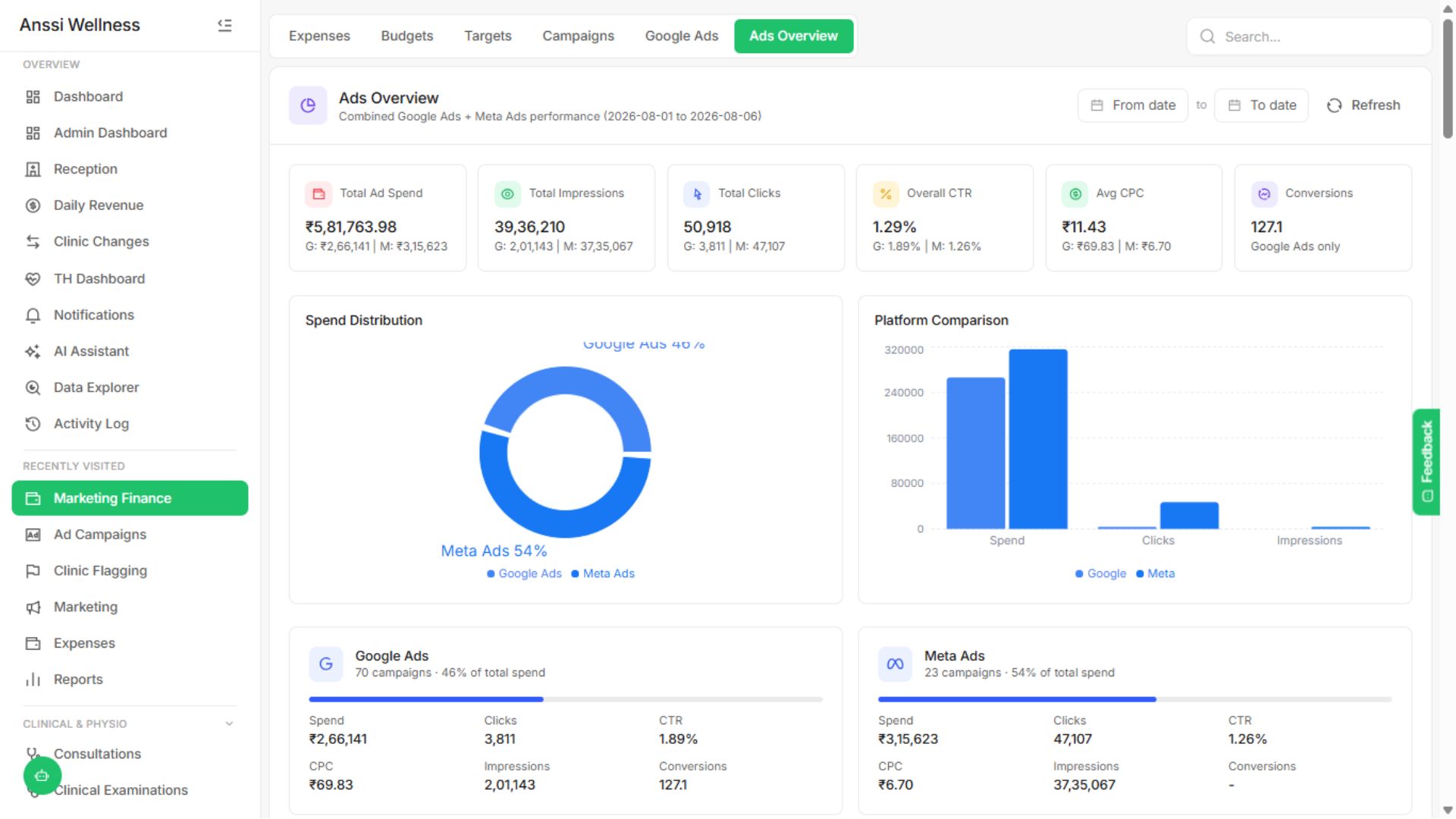
- 05Marketing joined to outcomes rather than run beside them - ad campaigns, Facebook lead capture, social accounts, scheduling and comments, drip email automations with rules and templates, and lead assignment feeding the same pipeline the clinics work.
- 06An AI layer applied where it pays for itself: consultation transcription, doctor-facing case analysis, a plain-language data-chat over operational data, and content generation for the marketing calendar.
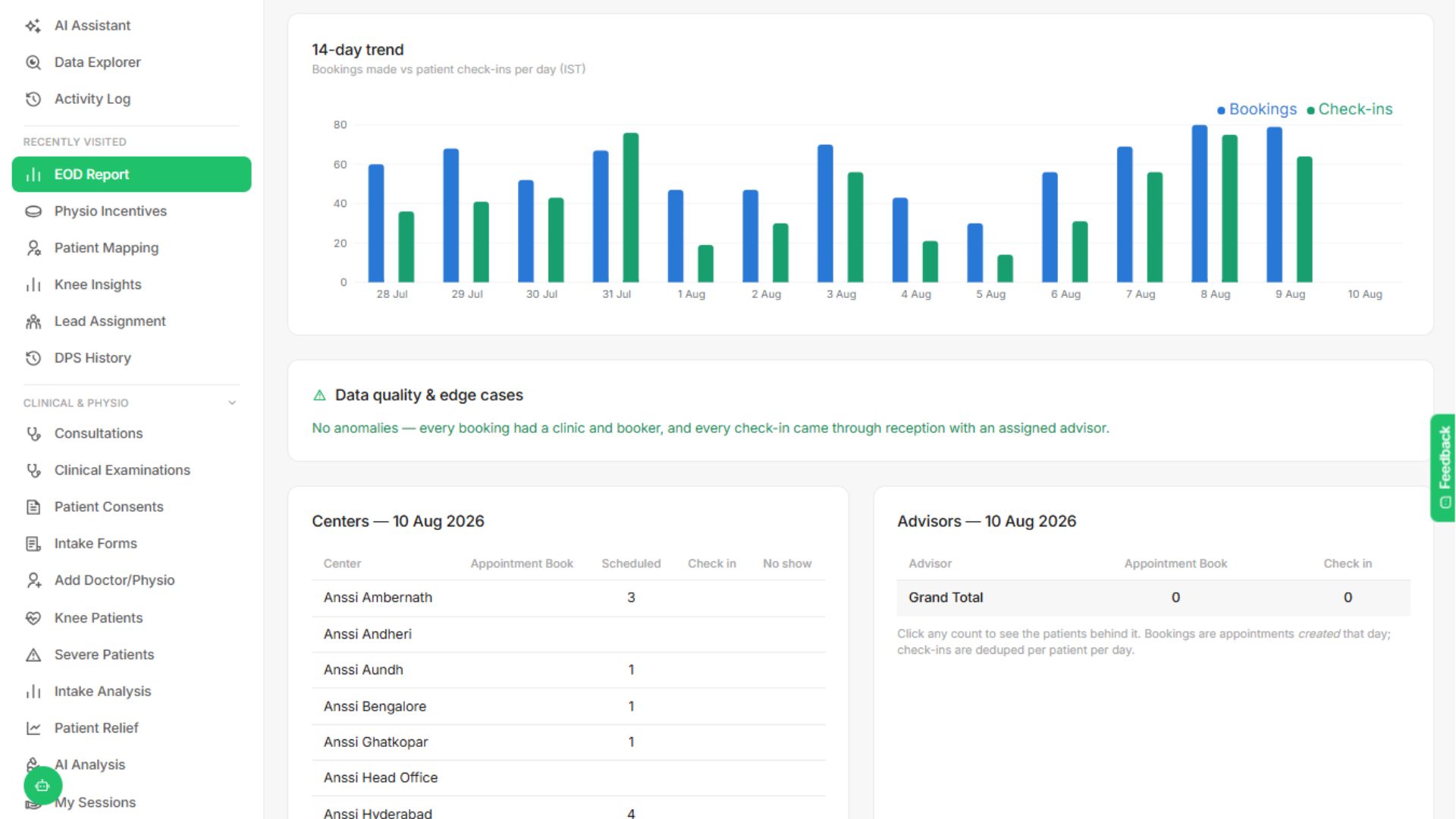
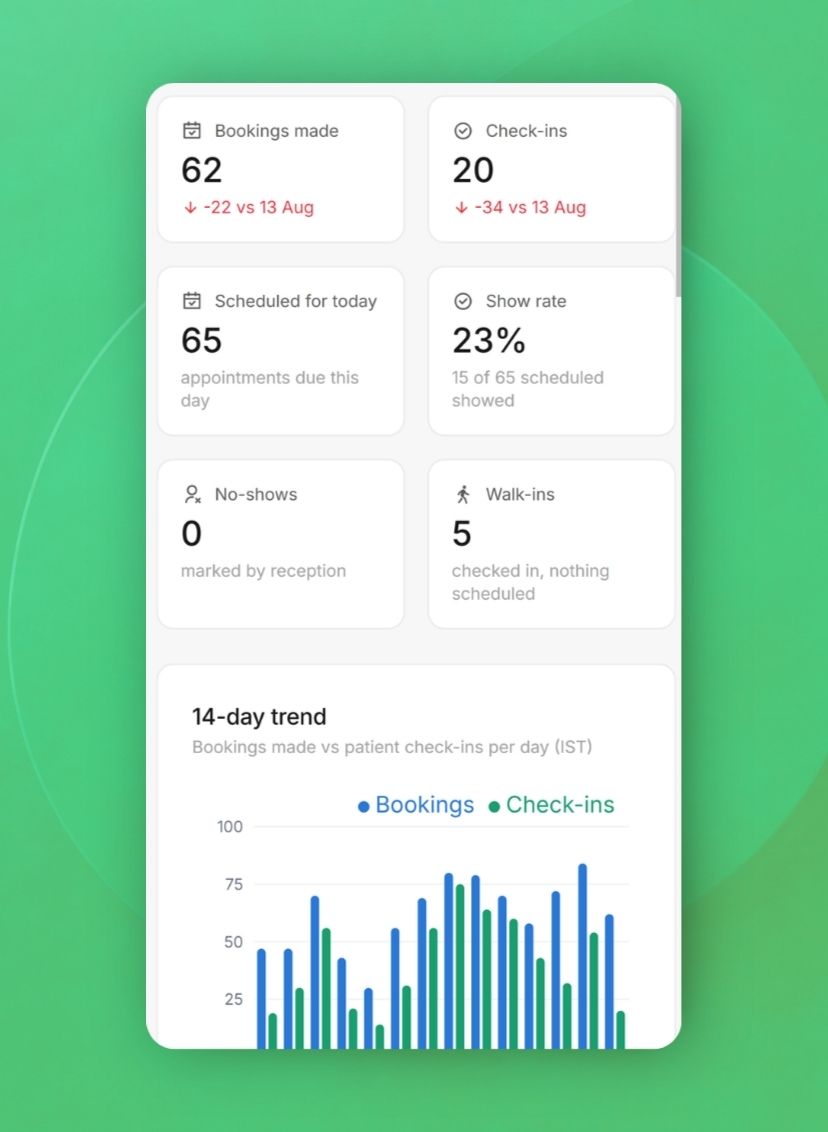
- 07Roughly twenty reporting views built for the people who ask the questions - end of day, daily revenue, clinic bifurcation, patient conversion, lead tracking, telecalling, physiotherapy, referrals, finance and business analysis.
- 08Public-facing routes that feed the same database - patient intake, feedback and review capture, plus careers and internship applications that land directly in the recruitment module.
The Results
- 01Sixteen clinics report into one system. Revenue, sessions, expenses and staffing can be read for a single site or the whole chain without a reconciliation exercise in between.
- 02A patient who moves between clinics keeps one continuous record - examinations, plan, sessions and progress travel with them instead of restarting at each location.
- 03Clinical care, collections, employment and marketing stopped being four separate systems describing the same patient in four different ways.
- 04Head office reporting became a live view rather than a monthly assembly job, with about twenty purpose-built report screens replacing returns compiled by hand.
The Achievement
- 280 dashboard screens and 124 API routes delivered in a single Next.js application on Supabase.
- Clinic-aware architecture throughout, with geofenced check-ins tying attendance to the site it was claimed at.
- Full double-entry finance including chart of accounts, bank reconciliation and per-clinic revenue.
- Complete HR lifecycle from attendance and rostering through to exit interviews and final settlement.
- AI used in production for transcription, clinical case analysis, natural-language data queries and content generation.
- Around twenty bespoke reporting views built for specific operational roles rather than one generic dashboard.