
Supply Chain, GST and Field Operations in One System
Intro
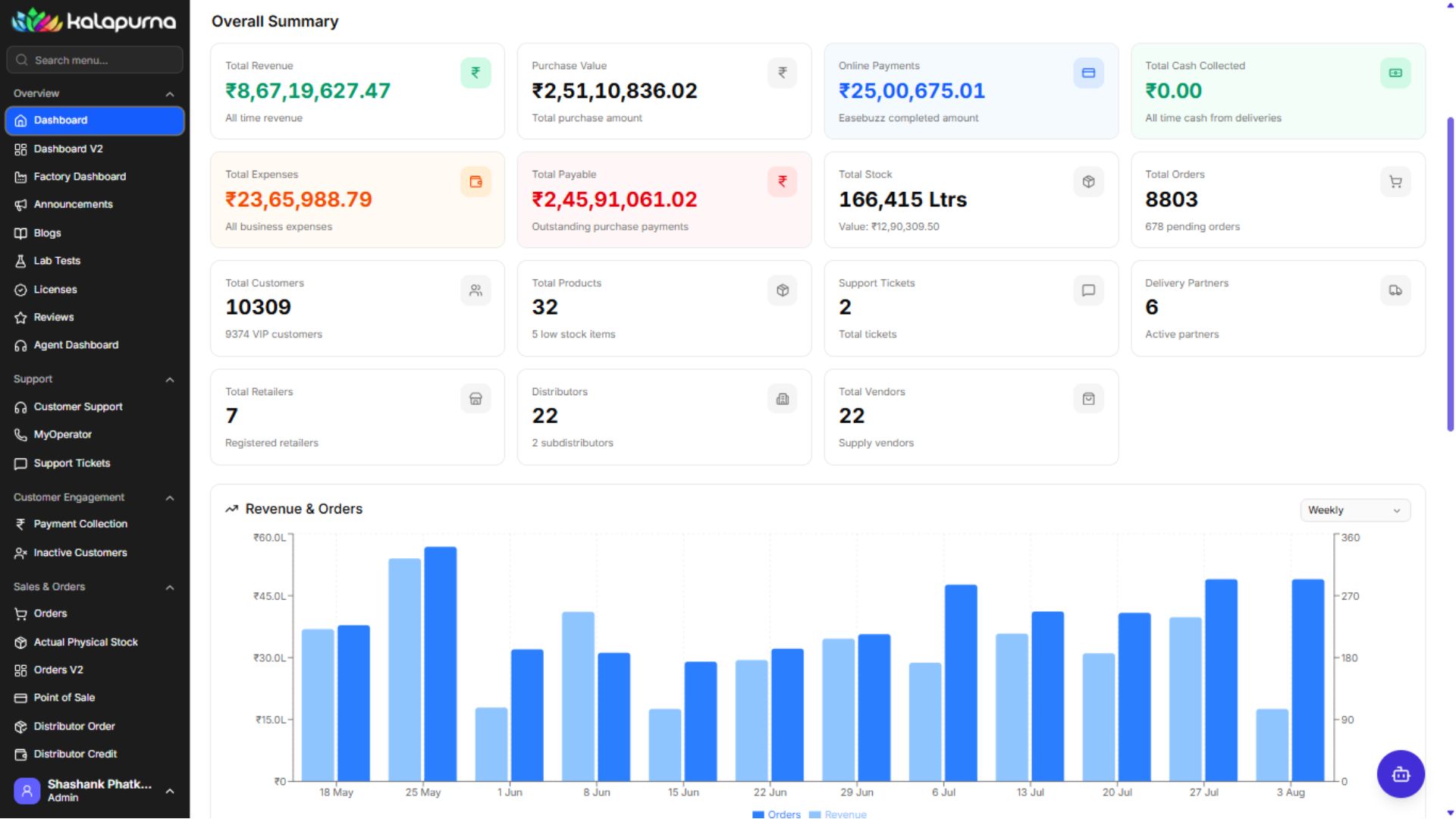
Kalapurna sells A2 ghee and wood-pressed oils direct to consumers, through distributors and through retailers at the same time. Grabodo built the system that runs all three: 137 dashboard screens and 61 API routes covering orders, multi-warehouse stock, double-entry accounting, statutory GST filing, telephony and last-mile delivery.
Kalapurna CRM is the internal operating system behind the Kalapurna brand. It covers the full path a product takes from factory warehouse to a customer's door, and the full path the money takes back, in a single Next.js 15 application backed by Supabase.
The Background
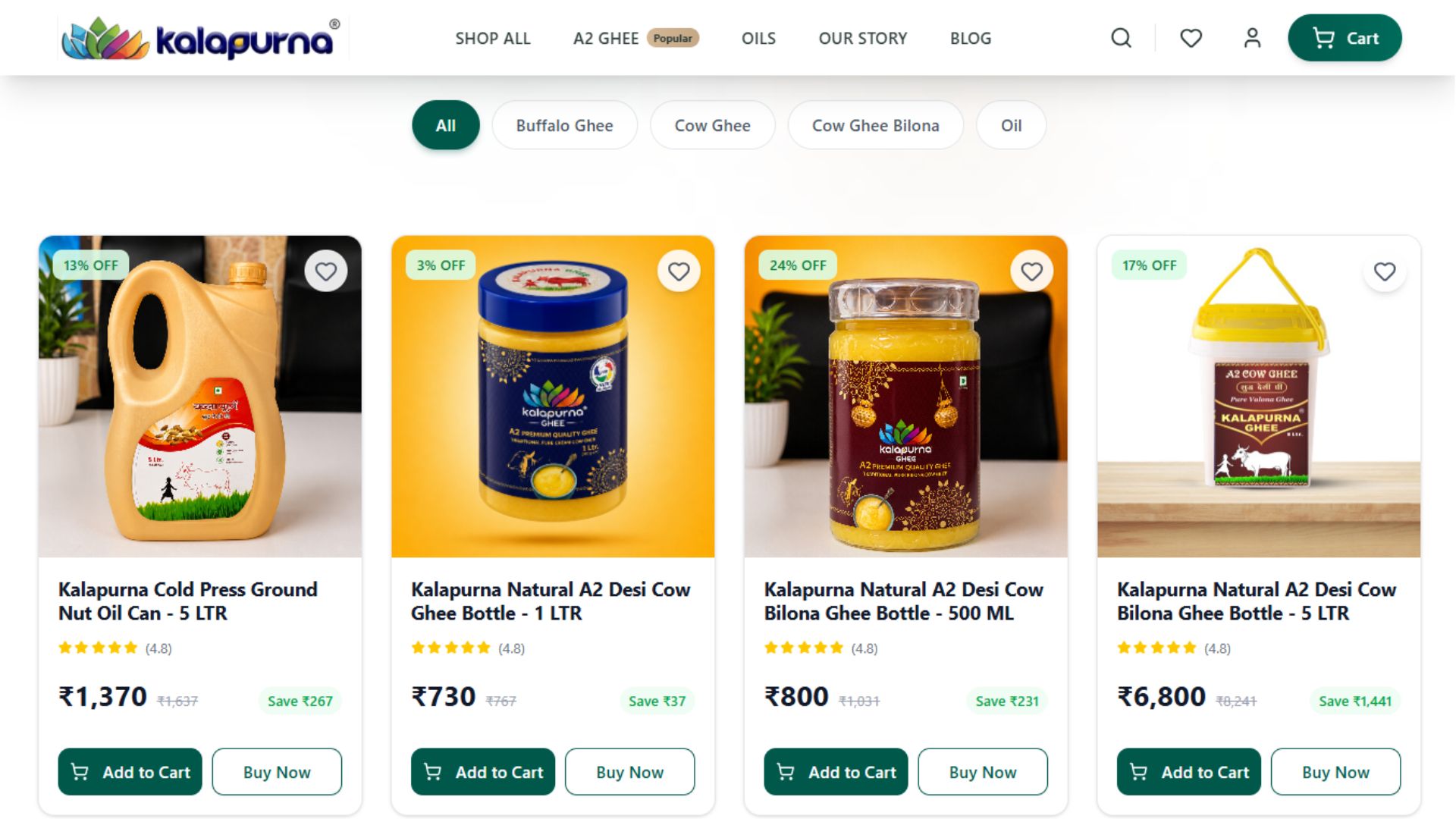
Kalapurna sells through three channels at once - direct to consumer on the storefront, through distributors, and through retail partners. Each channel prices differently, holds stock differently and settles differently. Spreadsheets and a stock register could not keep those three views of the same inventory in agreement, and GST filing meant re-keying every invoice a second time.
The Challenge
The system had to be a real books-of-account application, not a dashboard over a product table. That meant double-entry accounting with a chart of accounts, journal entries, ledgers, trial balance, AR and AP aging, period close and reconciliation - and statutory output that a chartered accountant would accept: GSTR-1, GSTR-2B reconciliation, GSTR-3B, balance sheet, profit and loss, and a Tally export.
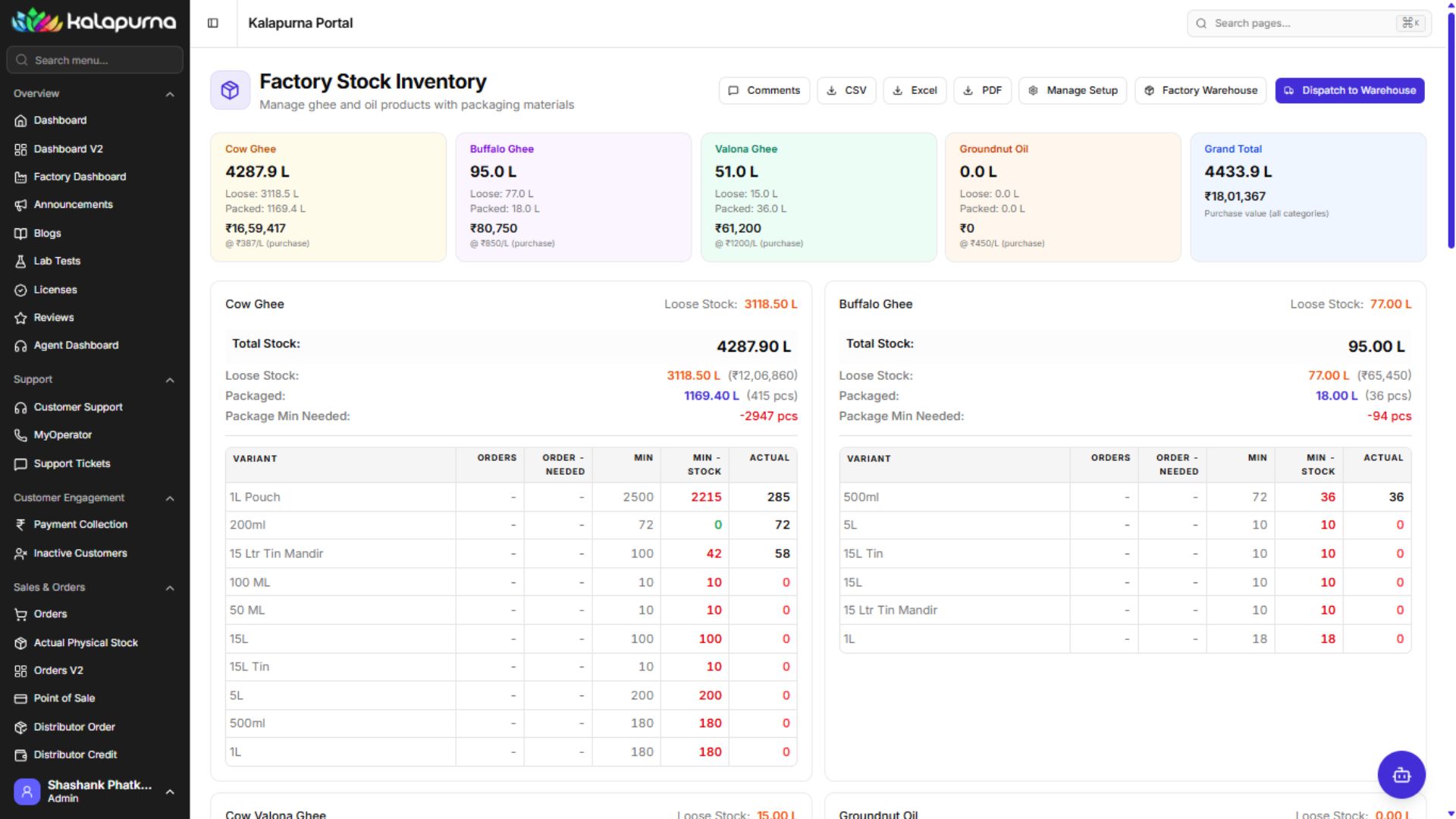
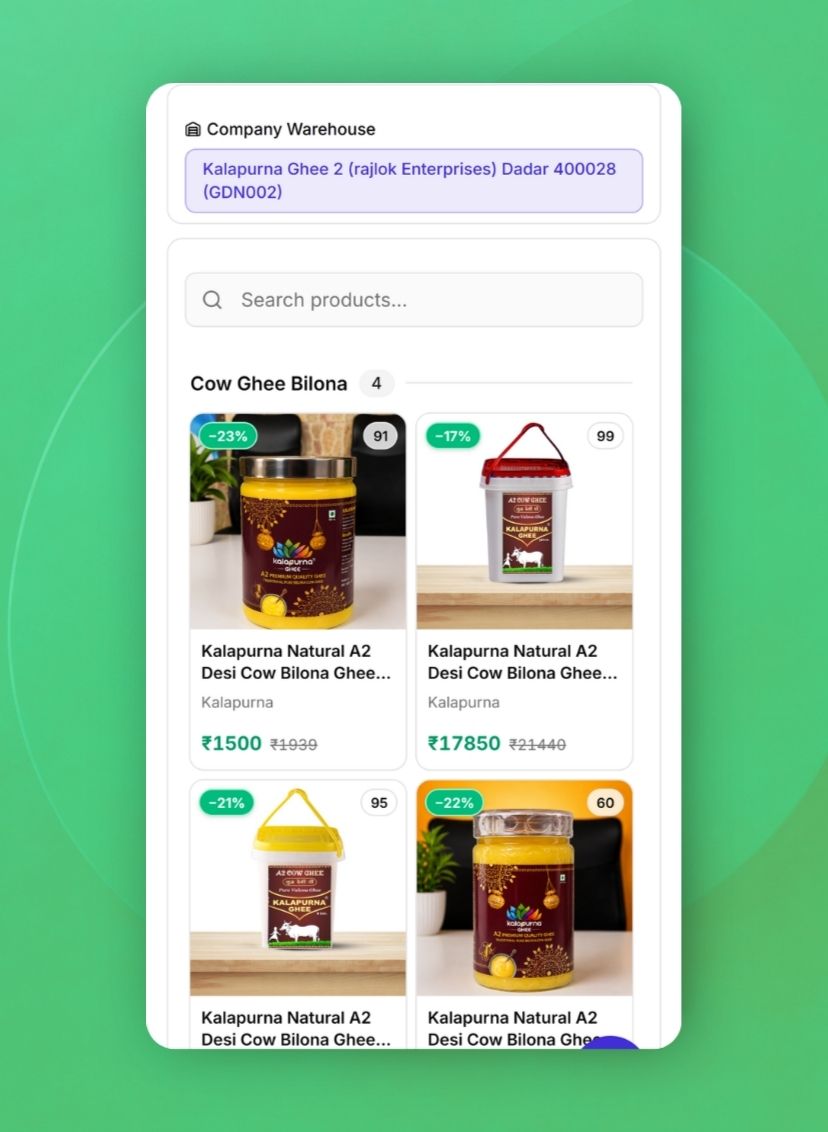
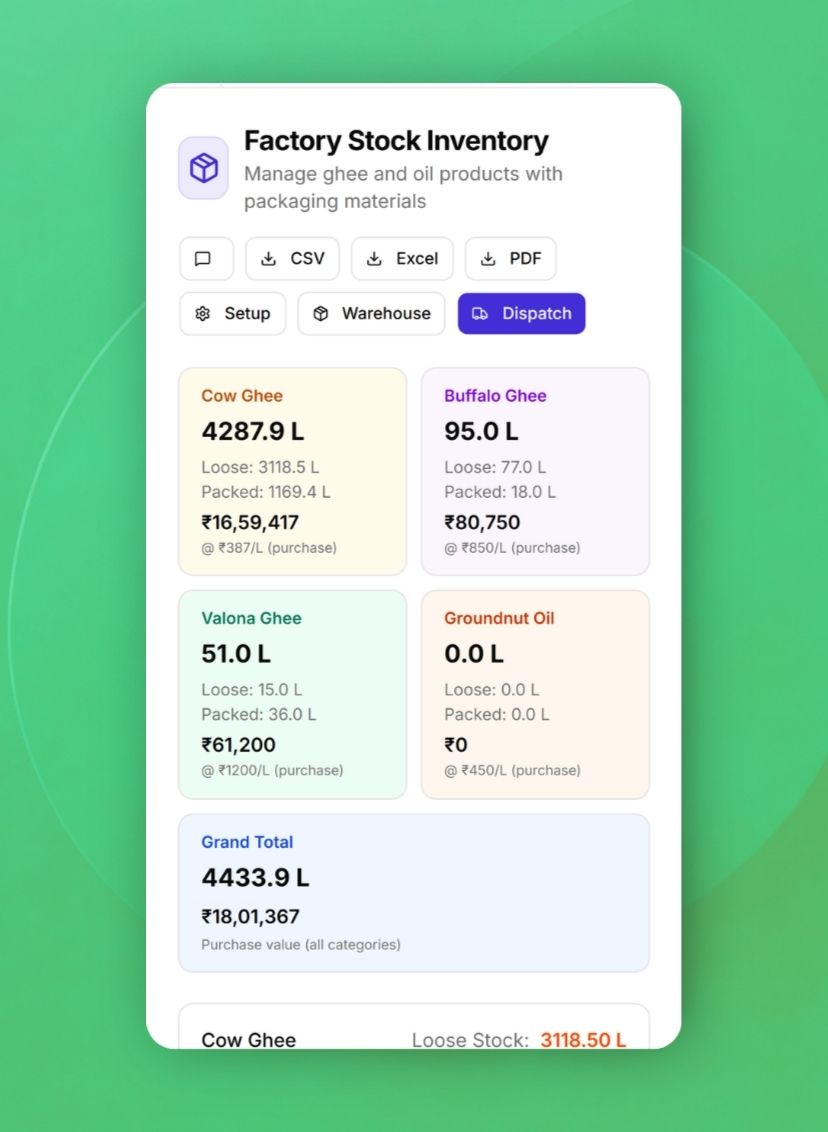
It also had to hold ownership-aware stock. A unit sitting in a distributor's godown is not company stock, but it still has to be visible, transferable and auditable. The build tracks stock per company warehouse, per distributor, per retailer and per delivery partner, with inter-warehouse transfers, reserved quantities, write-offs, a full stock ledger and low-stock alerts on each location.
The Solution
Compliance runs against the live GSTN APIs rather than an export step: e-invoices are generated and cancelled in place, and e-way bills are raised from either a sales order or a purchase, with vehicle details updatable after dispatch.
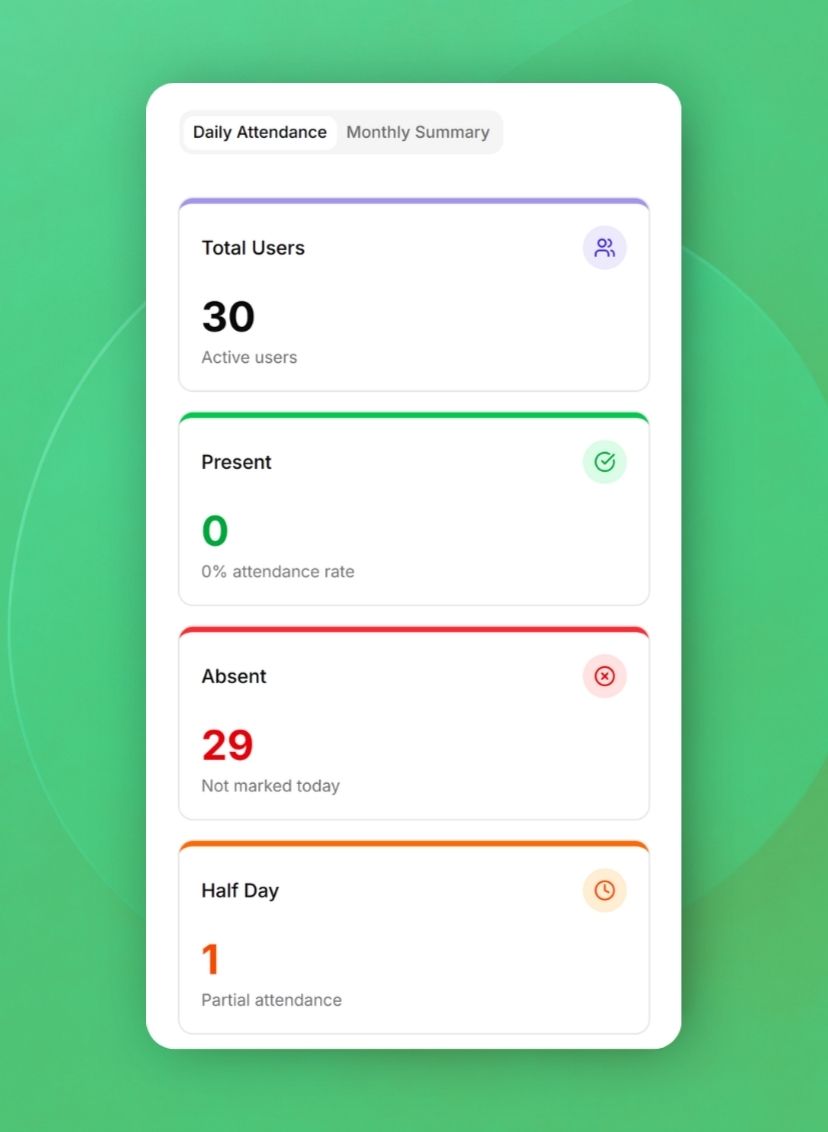
Around that, the platform integrates Easebuzz for payment links, collection and reconciliation, Shiprocket for shipping, MyOperator and Ozonetel for click-to-call, live call state, recordings and WhatsApp templates, and thermal printing for counter invoices. A POS screen, distributor and retailer panels, credit and debit notes, delivery sheets, route optimisation and assignment, agent commissions, attendance, and a ticketing desk with live call control complete the surface.
The Solution
- 01A double-entry accounting core with a chart of accounts, journal entries, ledgers, trial balance, AR and AP aging, tax ledger, reconciliation and period close - so the CRM is the books of account, not a reporting layer bolted onto one.
- 02Statutory output built to be filed as-is: GSTR-1, GSTR-2B reconciliation and GSTR-3B, alongside balance sheet, profit and loss, and a Tally export for the accountant.
- 03Live GSTN integration rather than an export step - e-invoices generated and cancelled in place, and e-way bills raised from either a sales order or a purchase, with vehicle details updatable after dispatch.
- 04Ownership-aware inventory across company godowns, distributors, retailers and delivery partners, with inter-warehouse transfers, reserved quantities, write-offs, opening-stock capture, a full stock ledger and per-location low-stock alerts.
- 05Dedicated panels for each channel - distributor, retailer, vendor and agent - covering their own orders, credit, stock and commissions, so partners self-serve instead of phoning the office.
- 06Money and movement wired to real providers: Easebuzz for payment links, collection and reconciliation, Shiprocket for shipping, credit and debit notes for adjustments, and thermal printing for counter invoices.
- 07A support desk with live telephony - MyOperator and Ozonetel drive click-to-call, live call state, recordings, dispositions and WhatsApp templates, with order confirmations sent on WhatsApp automatically.
The Results
- 01Three sales channels - direct to consumer, distributor and retail - now run against one inventory and one ledger instead of three sets of numbers that had to be argued into agreement.
- 02Compliance happens where the invoice is raised. E-invoices and e-way bills are produced against the live GSTN APIs at the point of sale, removing the second round of data entry that filing used to require.
- 03Field activity reaches the books directly - deliveries, collections, expenses and counter sales all post into the same accounting system.
- 04The CRM, the storefront and the driver app share one Supabase database, so a change in any of the three is immediately true in the other two.
The Achievement
- 137 dashboard screens and 61 API routes delivered in a single Next.js 15 and React 19 application.
- Live GSTN e-invoicing and e-way bill generation, raised directly from orders and purchases.
- Multi-warehouse stock tracking with company, distributor, retailer and delivery-partner ownership models.
- Complete books of account through to trial balance, profit and loss, and balance sheet.
- GST returns prepared in-system - GSTR-1, GSTR-2B reconciliation and GSTR-3B - plus a Tally export.
- Telephony, WhatsApp and thermal printing integrated into everyday order and support workflows.