
Freight Booking Turned Self-Serve Platform
Intro
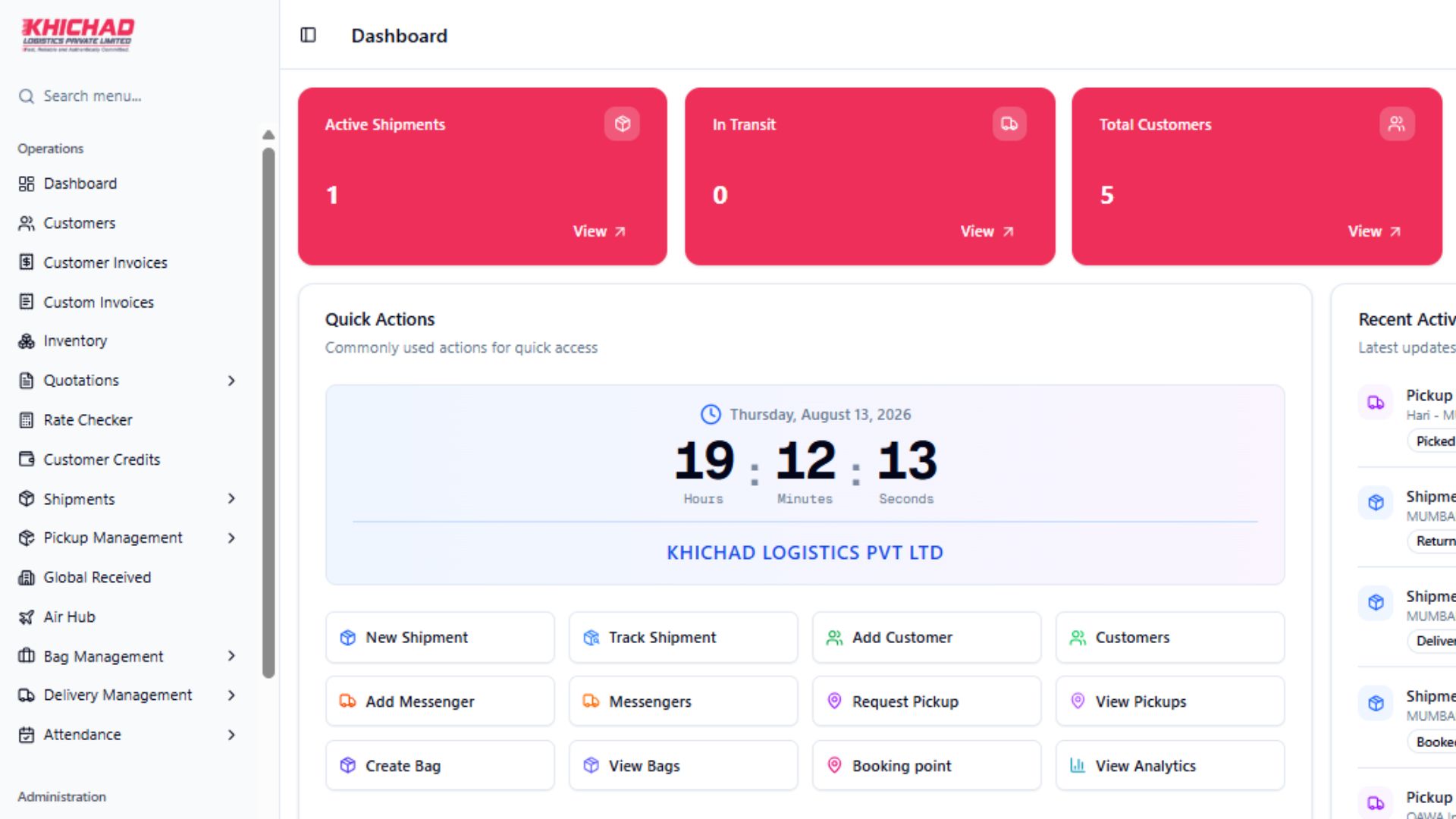
Khichad Logistics moves freight across India through booking points, hubs and franchise branches. Grabodo built the platform that runs it - 154 screens and 45 API routes covering the shipment from pickup to delivery, the network that carries it, the money it generates and the staff who handle it.
Khichad Logistics is a pan-India freight and courier operation. Grabodo built the platform it runs on - a Next.js application on Supabase covering the public site, the operational back office, and a customer portal that turned a phone-based booking desk into self-service.
The Background
Every booking arrived by phone or email and was written into the system by a member of staff. That put a person between the customer and the shipment for every consignment, capped how much the business could take on without hiring, and made the booking desk the bottleneck on a growing network of branches and franchises.
Behind the desk, the physical operation was tracked on paper. Bags, manifests, pickup runs and hub transfers were recorded by hand, so the answer to where is my consignment depended on who was asked.
The Challenge
Self-service could not simply be a form bolted onto the front. A customer booking their own shipment produces a real consignment that has to enter the same chain of custody as one booked at the counter - bagged, manifested, moved between hubs, assigned to a messenger and delivered.
Pricing was the other obstacle. Freight rates vary by zone, by service and by customer, across domestic and international lanes, so letting customers book themselves meant the rate card had to be modelled properly rather than quoted by whoever answered the phone.
The Solution
The physical network is modelled as first-class data - booking points, main offices, franchises, air and area hubs, cities, pincodes and zones - with zone rates and per-customer rate cards on top, so a quote is calculated rather than negotiated. A rate checker and quotation maker expose the same pricing to staff and customers alike.
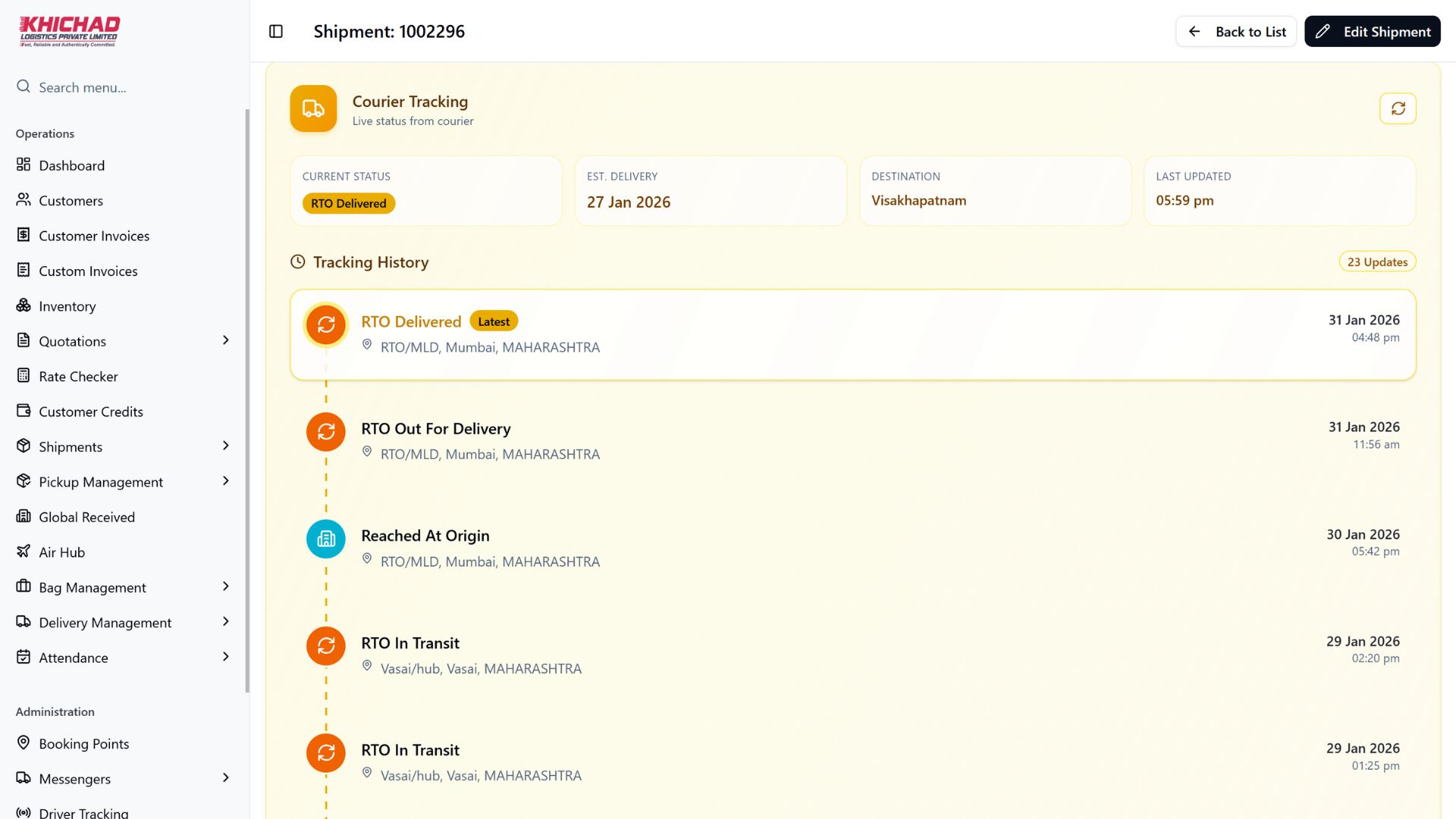
Chain of custody runs through bags and manifests: consignments are bagged, manifested, tracked in transit, received and reconciled at the far end, with pickup runs scheduled, assigned, printed and monitored for delay. Delhivery, iCarry and Shiprocket are integrated for the legs Khichad does not carry itself.
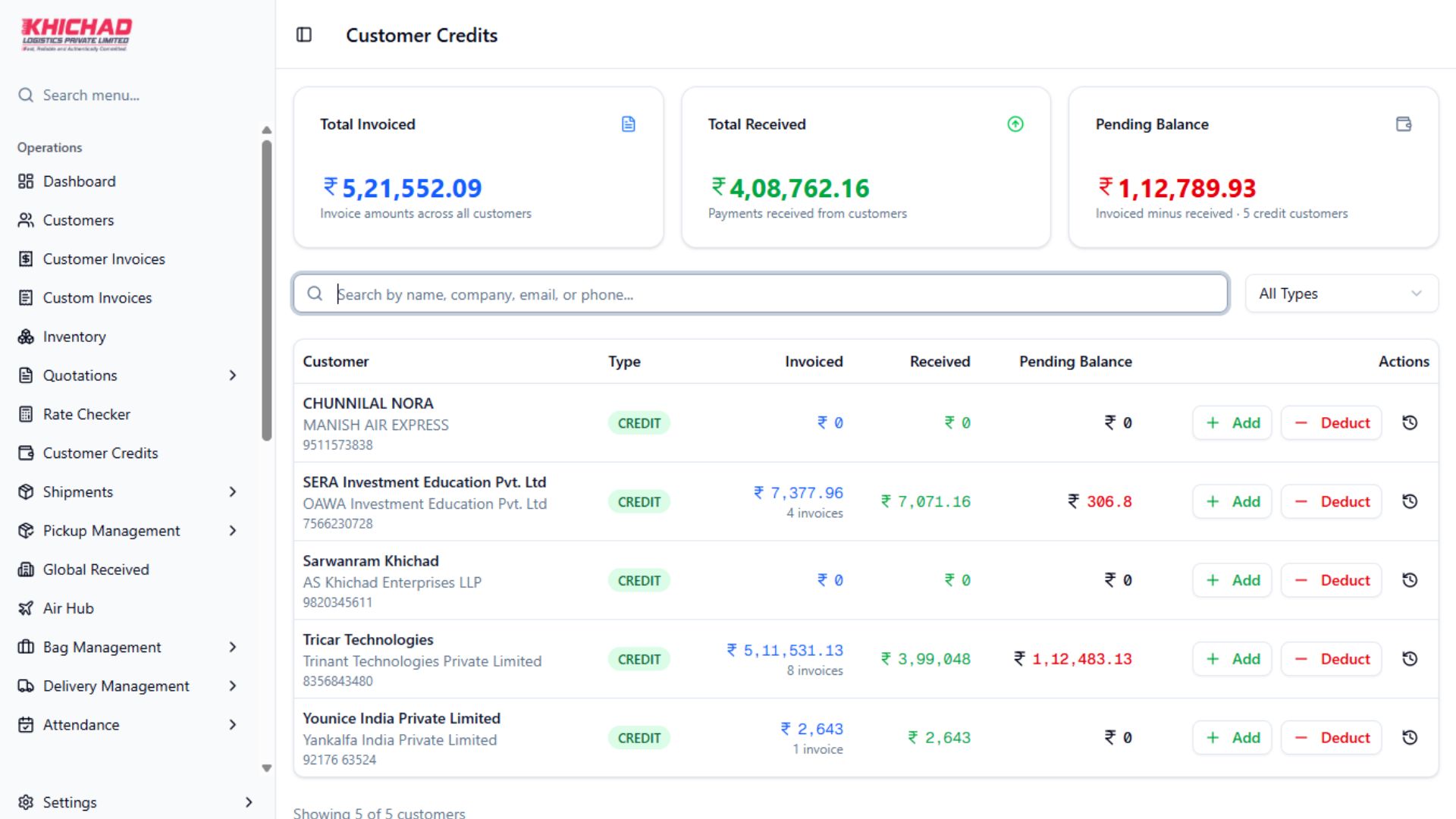
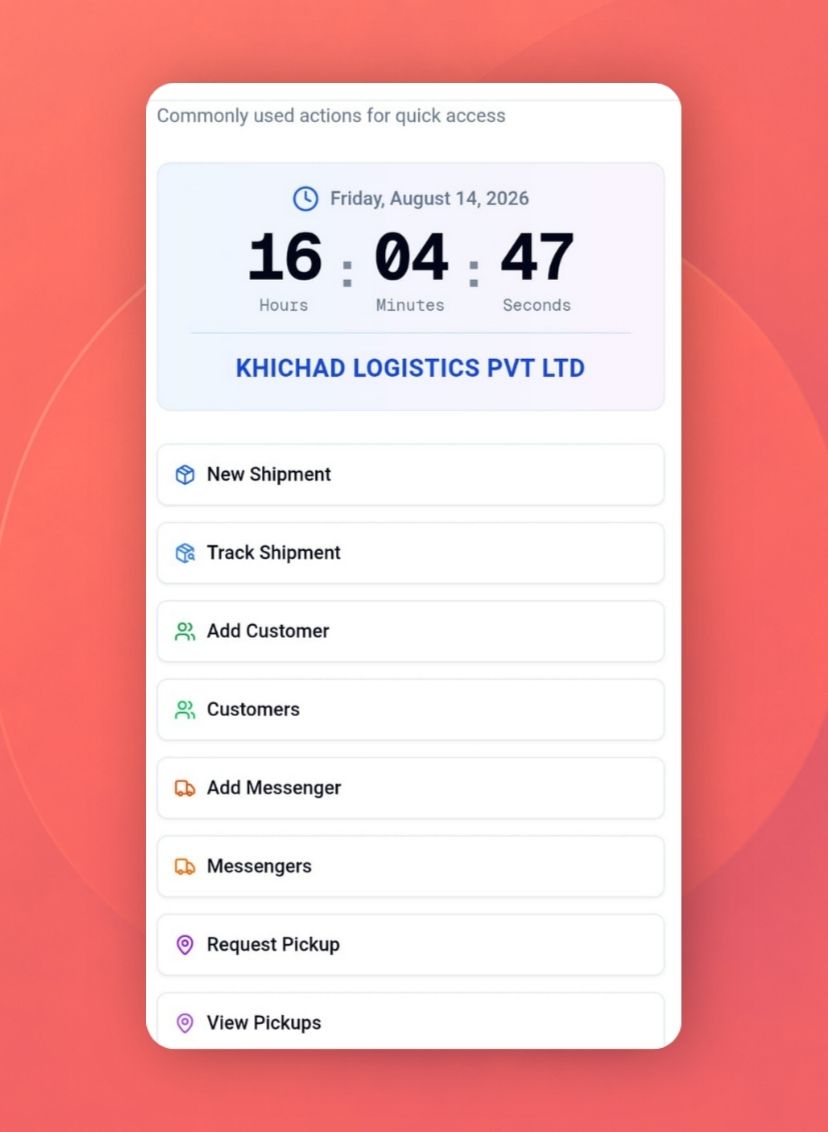
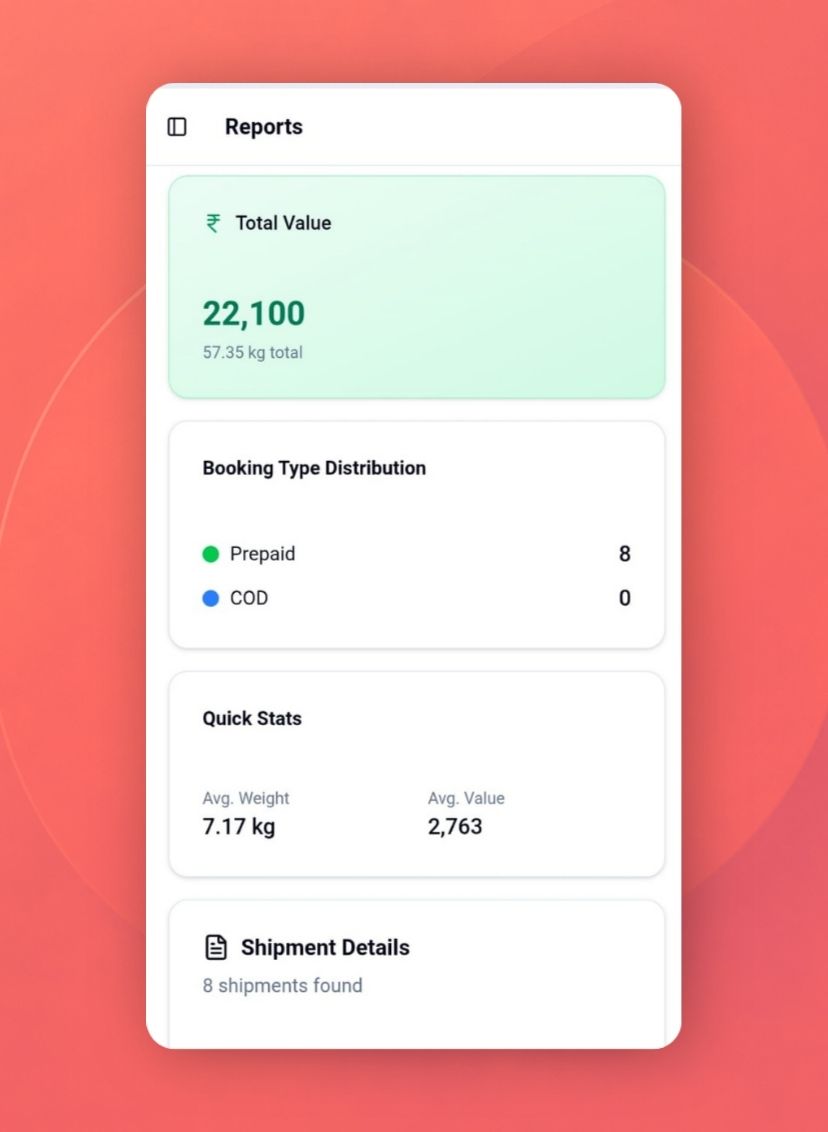
The customer portal gives clients their own dashboard, shipment creation, single and bulk label printing, tracking, invoices, credits, inventory and products. Billing covers customer and custom invoices, credits, payment options and GSTR-1 and GSTR-2 filing, while staff management, permissions, attendance with check-in, salary slips and ID cards run the workforce from the same system.
The Solution
- 01The physical network modelled as first-class data - booking points, main offices, franchises, air and area hubs, cities, pincodes and domestic and international zones - so the platform understands the operation rather than just recording it.
- 02Pricing that calculates instead of negotiating: zone rates and per-customer rate cards, exposed to both staff and customers through a rate checker and a quotation maker.
- 03Chain of custody through bags and manifests - consignments bagged, manifested, tracked in transit, received and reconciled at the far end, with printable manifests at each handover.
- 04Pickup operations as a managed workflow: scheduling, zone assignment, allocation to messengers, manifest generation and printing, plus dedicated views for pending, received and delayed runs.
- 05A customer portal that removed the booking desk from the critical path - clients create shipments, print single and bulk labels, track consignments, and manage invoices, credits, inventory and products themselves.
- 06Third-party carriers wired in for the legs Khichad does not run itself, with Delhivery, iCarry and Shiprocket shipments handled alongside the in-house network.
- 07Billing covering customer invoices, custom invoices, credits and payment options, with GSTR-1 and GSTR-2 prepared in-system.
- 08Workforce management in the same platform - staff records and granular permissions, attendance with check-in and reporting, salary history and slips, and printable ID cards.
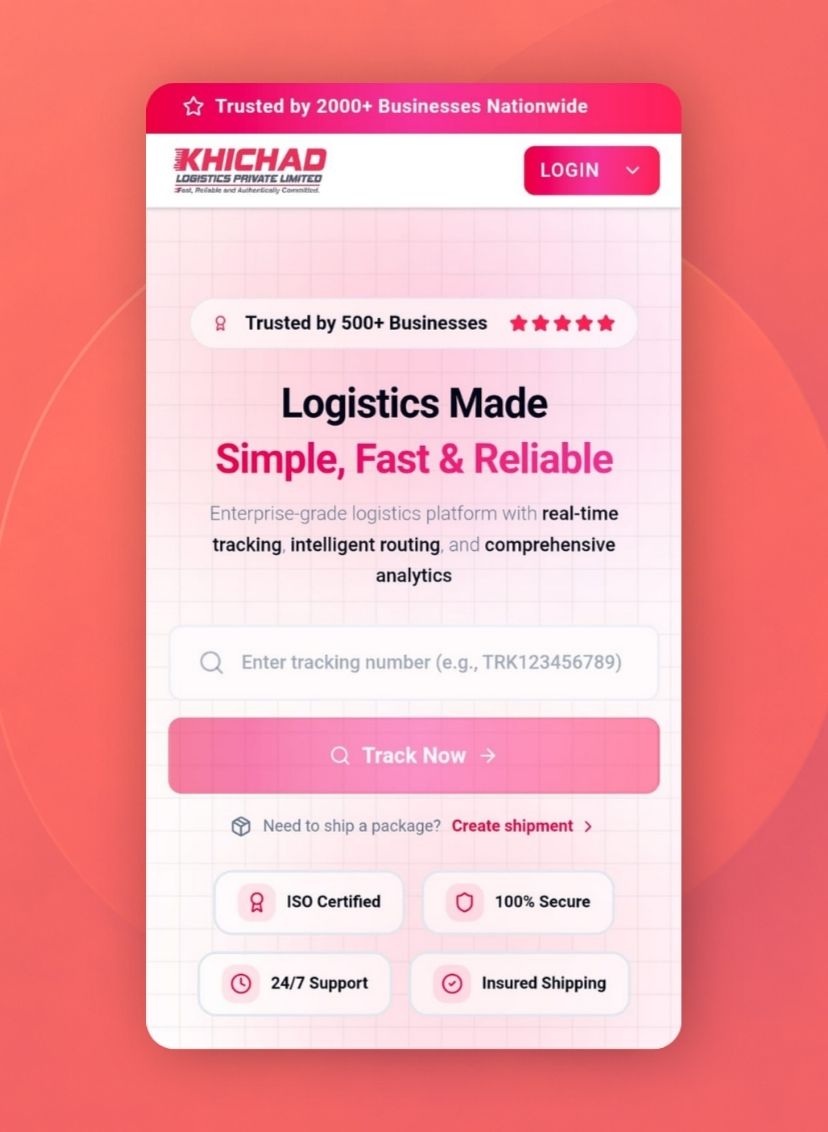
- 09A full public site on the same codebase - services, pricing, tracking, quote requests, help centre and the complete set of policy pages - so marketing and operations do not diverge.
The Results
- 01Booking stopped being a phone call. Customers raise their own consignments, and those consignments enter the same bagging, manifest and delivery chain as counter bookings.
- 02Where is my consignment became a question the system answers rather than a person, with custody recorded at every handover between pickup, bag, hub and messenger.
- 03Quoting became consistent across the network - the same zone rates and customer rate cards apply whether a price comes from a branch, the portal or the rate checker.
- 04Growth stopped being gated on hiring booking staff, because taking on more volume no longer means keying in more bookings.
The Achievement
- 154 screens and 45 API routes delivered in a single Next.js application on Supabase.
- A self-serve customer portal with shipment creation, bulk label printing, invoices, credits and inventory.
- Bag and manifest tracking giving full chain of custody from pickup through hub transfer to delivery.
- Three courier integrations - Delhivery, iCarry and Shiprocket - running alongside the in-house network.
- Zone-based and per-customer rate cards spanning domestic and international lanes.
- GSTR-1 and GSTR-2 filing, payroll and attendance handled inside the same platform.